Having carried out my review of the literature, identified a gap in the research and established its theoretical framework, the next task was to design the research – to plan what I’m going to do – how I’m actually going to ‘produce knowledge’!

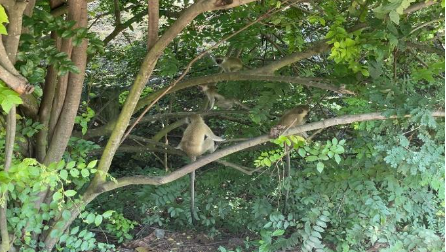
When I set out on this PhD journey I was strongly motivated to continue in the same area of work that I had been involved in for the last few years as Programmes Director for an education INGO – basically the UN’s Sustainable Development Goal 4.1 – ‘ensuring free and equitable access to quality education for all children’. I thought I would be looking into the reasons why children are not going to school (over two million of secondary age in Tanzania) and what was being done about it. Through my review of the literature, however, I realised that the reasons for this desperate situation are already well researched and understood and that many policies are already being rolled out to deal with them. So where was the problem? – and from my perspective – what was I going to research?
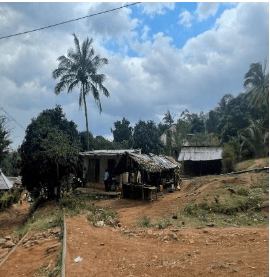
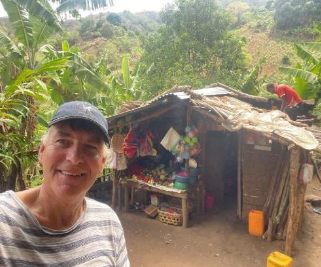
Well, the problem is that the policies are not making a widespread and sustainable impact and in terms of ‘the number of children not going to school’ the situation is actually getting worse rather than better. Whilst there are more children in secondary school in Tanzania than ever before, there are also more children of this age group out of school than ever before. Part of the reason for this is rapid population growth, but education (or the lack of it) plays a key role in birth rate and in the broader issues of entrenched poverty, so education is still a critical pathway – perhaps the critical pathway – towards progress. The bottom line is that the education ‘solutions’ are not working. It is not that particular ‘solutions’ are not of value in theory, it is that they do not have sufficient breadth (connectivity), depth (substance) , pace, or effectiveness at the point of implementation, to make the sustainable progress that is needed.
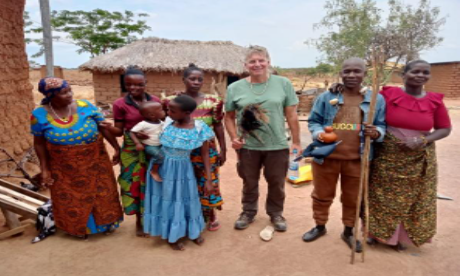
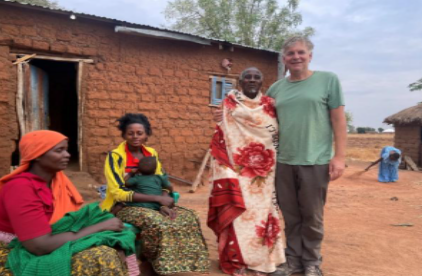
As the above became increasingly clear to me, I decided to switch the focus of my research from the grassroots / frontline of schools and communities (capacity limitations, economic, social and cultural barriers, quality issues in schools) to a more holistic exploration of the ‘education system’ itself. It seemed to me that to do this I needed to go as ‘high up’ within the system as possible – where the real power and influence mostly resides. I decided to swop the need for a translator, a 4×4 and long stints out in the bush with a broad brimmed hat, for a suit, a lap top and google maps. Taking this approach – basically going top-down rather than bottom-up – is something of a risk, as it bucks the trend of most PhD social science research.
Whether it will actually work or not remains to be seen! I’ll be researching what the ‘Tanzanian Education System’ actually is and how it operates (should be fairly straight forward) and its characteristics and professional working culture (less so, but just as important). I’m particularly keen to explore the issues of participation, power, communication, trust and the journey between policy, implementation and impact, or put another way – between intention and outcome. What are the constraints within the system? And from this, what changes could be introduced for the system to be more effective?
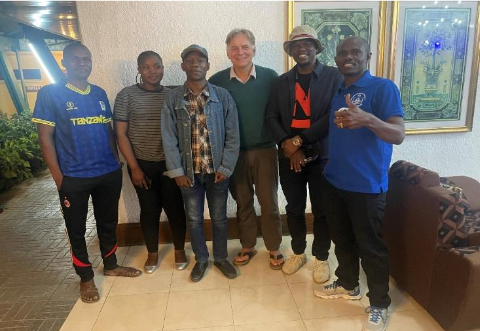

My research participants will be a range of senior stakeholders – policy makers and influencers, researchers, teacher educators, administrators and school leaders. I will be researching across five different regions of Tanzania, from schools to regional offices to universities, embassies, donor institutions and the Ministry of Education itself. Stage One of the research, which I’m just starting out on, consists of an initial round of 1 – 1 interviews (I’ve now got over fifty potential participant ‘contacts’, but I’ll be very pleased if I manage to reach my target of completing thirty actual interviews). I return to the UK in December to analyse the data and identify emergent themes and will go back to Tanzania in the Spring of 2025 for Stage Two – a series of regional forums, with a range of role holders (from the original interviewees) discussing in greater depth the themes, issues and quite possibly contradictions that emerged from my analysis of the original interviews. From what I can gather, the different role holders hardly ever meet – so Stage Two should be quite interesting.
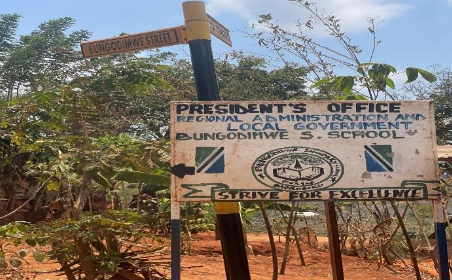

So that’s what I’m going to do. I feel that at last I’m really getting down to it and I’m excited at to see how it works out. There’s been plenty of research on education in Tanzania, but none as far as I’m aware that has taken this approach of exploring (and hopefully ‘producing knowledge’ about) the education system itself.
My ultimate aim, of course, is for the research to lead to conclusions and recommendations that could be of some value to the Tanzanians, as they attempt to overcome the vast and complex educational problems their country faces.
If you would like to read further accounts of my PhD journey and upcoming research trips to Tanzania, please subscribe below!


 Back to school Tanzania
Leave a reply to Janet Chapman Cancel reply